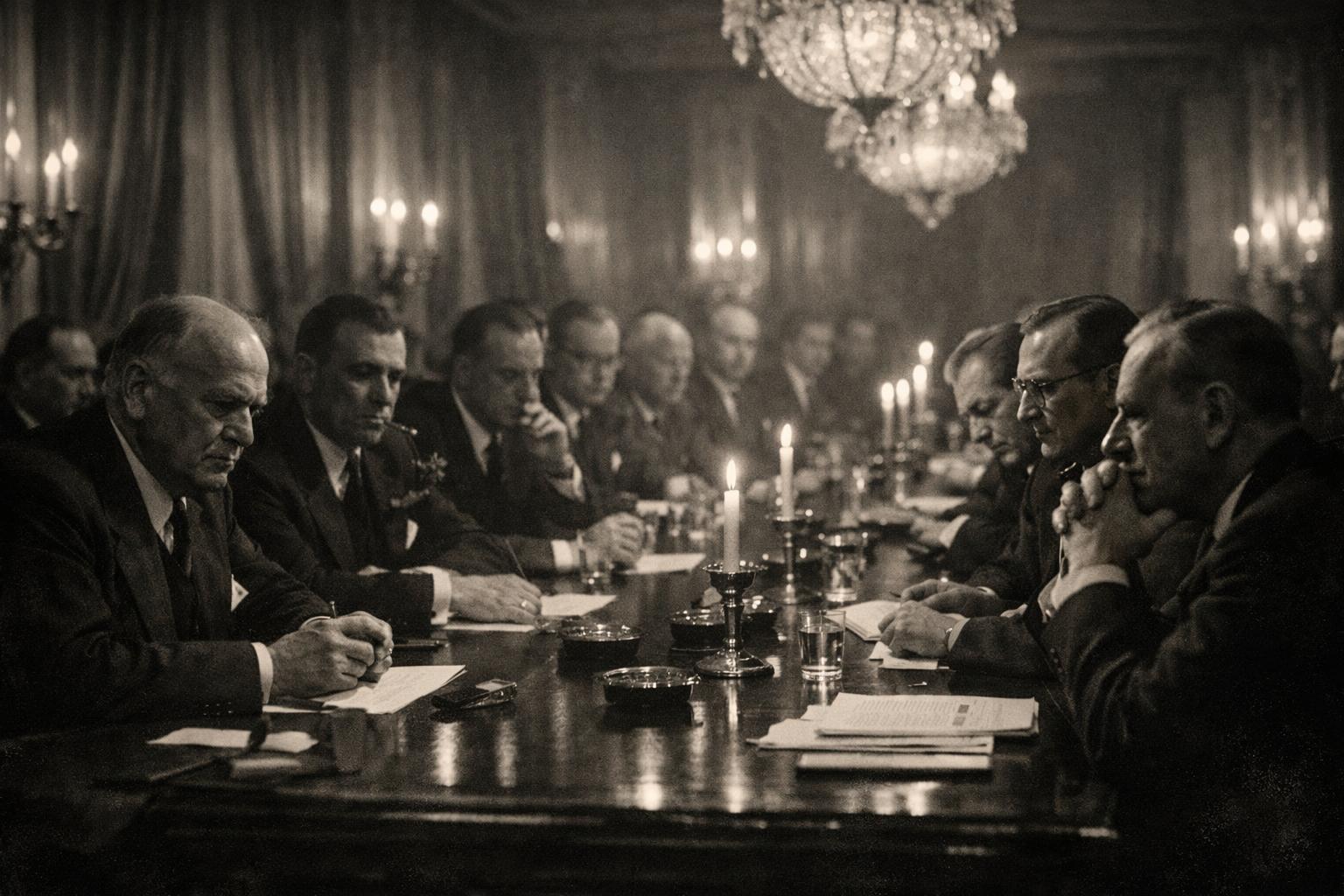
What if the most powerful decisions shaping our world were never made in public? No cameras. No press conferences. No accountability. Just a closed room filled with presidents, billionaires, prime ministers, and the architects of global finance — meeting in total secrecy, year after year, decade after decade.
That is not a conspiracy theory. That is the Bilderberg Group.
Since 1954, this private gathering of Western elites has met annually, rotating between luxury hotels across Europe and North America. The attendees are real. The meetings are real. The secrecy is undeniable. What remains disputed — and what makes the Bilderberg Group one of the most searched, most debated, and most misunderstood gatherings in modern history — is what exactly happens behind those closed doors, and what it means for the rest of us.
This post goes deeper than the headlines, expanding on the We Are History video Bilderberg Exposed: The Elite's Secret Meetings — digging into the history, the locations, the power players, the critics, and the one question that never quite goes away: who controls the world?
The Origin Story: A Hotel, a Politician, and a Postwar Vision
To understand the Bilderberg Group, you have to understand the world it was born into.
It was 1954. Europe was still rising from the rubble of World War II. The Cold War was intensifying. Anti-American sentiment was spreading across Western Europe, and transatlantic tensions threatened the fragile unity that NATO had established just five years earlier.
Enter Polish-born political operative Józef Retinger — described by historians as one of the most connected behind-the-scenes power brokers of the 20th century. Retinger was alarmed by the widening rift between Europe and the United States. His solution was dialogue — but not the performative kind that plays out in front of cameras and press corps. He wanted real conversation, off the record, between people with genuine power.
With the backing of Prince Bernhard of the Netherlands and key figures on both sides of the Atlantic, Retinger organized a private gathering at the Hotel de Bilderberg in Oosterbeek, a quiet town near Arnhem in the Netherlands. The date: May 29–31, 1954. Roughly 80 delegates from 11 countries attended. No press. No minutes. No public record.
The Bilderberg Group had begun — and it has never stopped.
The Hotel de Bilderberg: Where It All Started
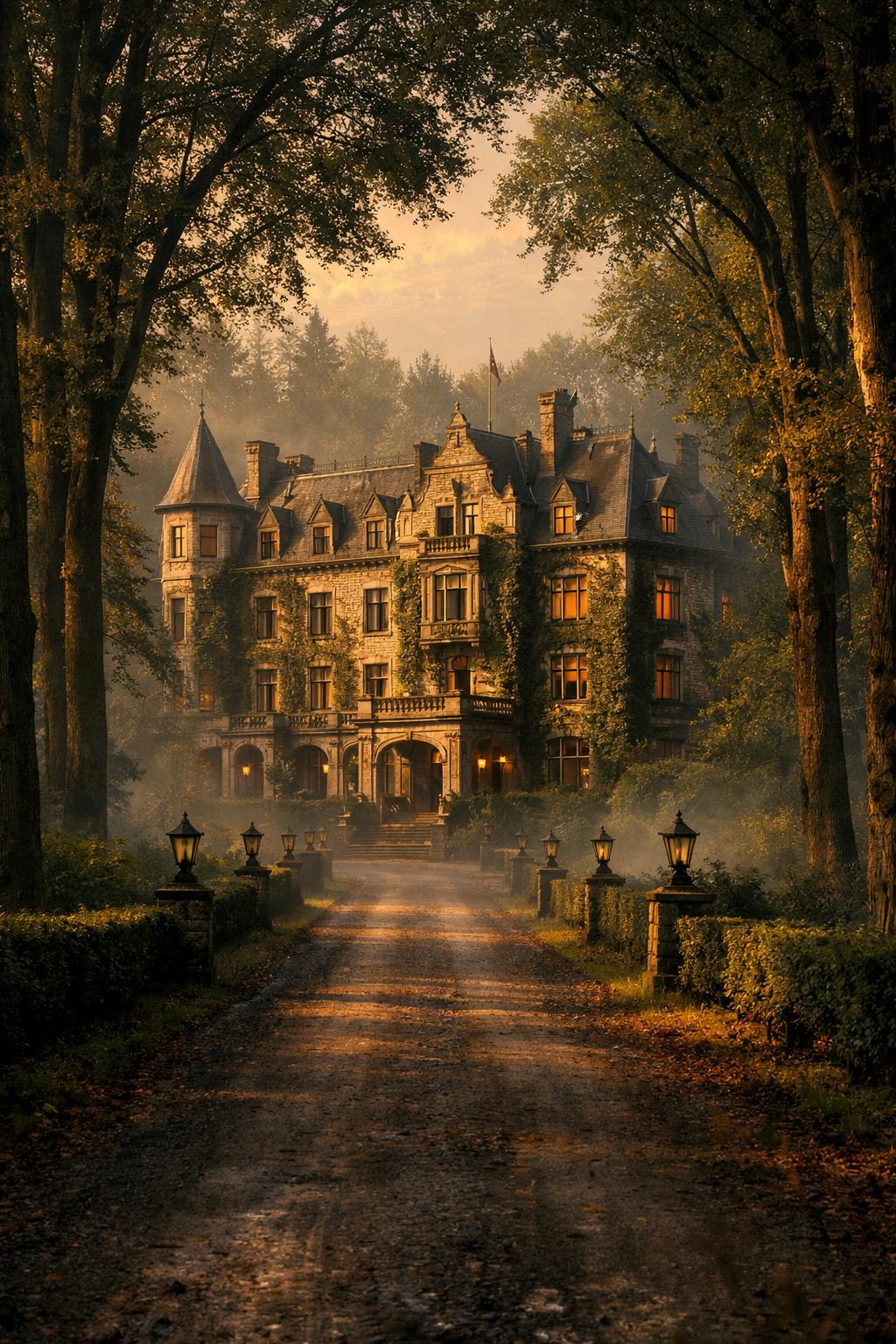
For history travelers, the birthplace of the Bilderberg Group is a destination unlike any other. The Hotel de Bilderberg still stands in Oosterbeek, surrounded by the dense forests of the Veluwe region — a grand, stately property welcoming guests since the early 20th century.
But the town itself carries far heavier history. Oosterbeek was the site of the Battle of Arnhem in September 1944, one of the most grueling and costly Allied operations of World War II, immortalized in the film A Bridge Too Far. The Airborne Museum Hartenstein — dedicated to that battle — sits just a short walk from the hotel grounds.
There is something almost poetic about it. The Bilderberg Group, a meeting conceived to rebuild Western unity after a devastating global war, was founded in a town that had witnessed one of that war's most heartbreaking last stands. Oosterbeek rarely makes European tourist itineraries. But for anyone who chases the crossroads of history and power, it is extraordinary.
The hotel today operates as a wellness and conference resort, with no formal connection to the Group that gave it its name. Book a room. Walk the grounds. Stand in the place where, in 1954, 80 delegates decided the world's most important conversations would happen in private.
The Guest List: A Who's Who of Global Power
Over seven decades, the Bilderberg Group's annual guest list has read like a directory of the Western world's most influential people. Unlike the World Economic Forum in Davos — sprawling, publicized, attended by thousands — Bilderberg is deliberately intimate. Typically 120 to 150 invitees. No observers. No note-takers. No livestreams.
Political leaders — Multiple sitting and future heads of state have attended. Researchers have noted a striking pattern for decades: ambitious politicians show up at Bilderberg on their way up, then go on to lead their countries. Coincidence? Selection? Something more deliberate? It remains one of the Group's most enduring open questions.
Financial titans — Senior figures from Goldman Sachs, Deutsche Bank, the World Bank, the International Monetary Fund, and virtually every major Western financial institution have reportedly sat at the Bilderberg table over the decades.
Intelligence community — Officials and former officials from the CIA, MI6, and allied agencies are reported to have attended. When the architects of the world's spy apparatus meet privately alongside CEOs and heads of state — with no record of what was said — people tend to notice.
Tech and media executives — In recent decades, the guest list has expanded to include leaders from major technology companies and global media conglomerates. The people who control what billions of others see and believe, sitting in the same room as the people who govern them, with no public account of the conversation.
Think tanks and academia — Prominent figures from the Council on Foreign Relations, the Trilateral Commission, and leading universities have participated — institutions that are themselves no strangers to scrutiny over their policy influence.
Since around 2010, the official Bilderberg website has published a general agenda and attendee list after each meeting — more transparency than the Group offered during its first several decades. Critics call it too little, too late. Supporters call it proof of good faith. The argument is unlikely to be settled any time soon.
The Chatham House Rule: Secrecy Built Into the Architecture
At the core of every Bilderberg meeting is a principle borrowed from a British think tank: the Chatham House Rule.
It is simple and powerful in equal measure: participants may use whatever they learn at the meeting, but they cannot reveal who said what, or even confirm who attended a specific session. No direct attribution. No quotable moments. No accountability for any specific statement made inside those walls.
The intent behind the rule is candor. The theory is that powerful people speak more honestly — more candidly, less politically — when they know their words won't be attached to their name in a newspaper. No grandstanding. No crafted soundbites. Just genuine exchange.
That logic is not entirely without merit. There is a reasonable argument that private dialogue between world leaders can prevent the kind of miscommunication that escalates into conflict. Some historians credit Bilderberg-style back-channel discussion with helping hold transatlantic alliances together during the most volatile decades of the Cold War.
But the Chatham House Rule also means this: conversations about global economics, military strategy, geopolitical realignment, technology governance, and the architecture of international power happen with zero public oversight. No transcripts. No recordings. No accountability to the voters, shareholders, or citizens whose lives will be shaped by what is decided.
Governments are legally required to disclose their deliberations through freedom of information laws. Publicly traded companies must report major decisions to regulators. The Bilderberg Group operates under no such obligation. It is entirely private — and that reality, more than any specific conspiracy theory, is what demands serious attention.
The Rotating Venues: A Global Circuit of Power
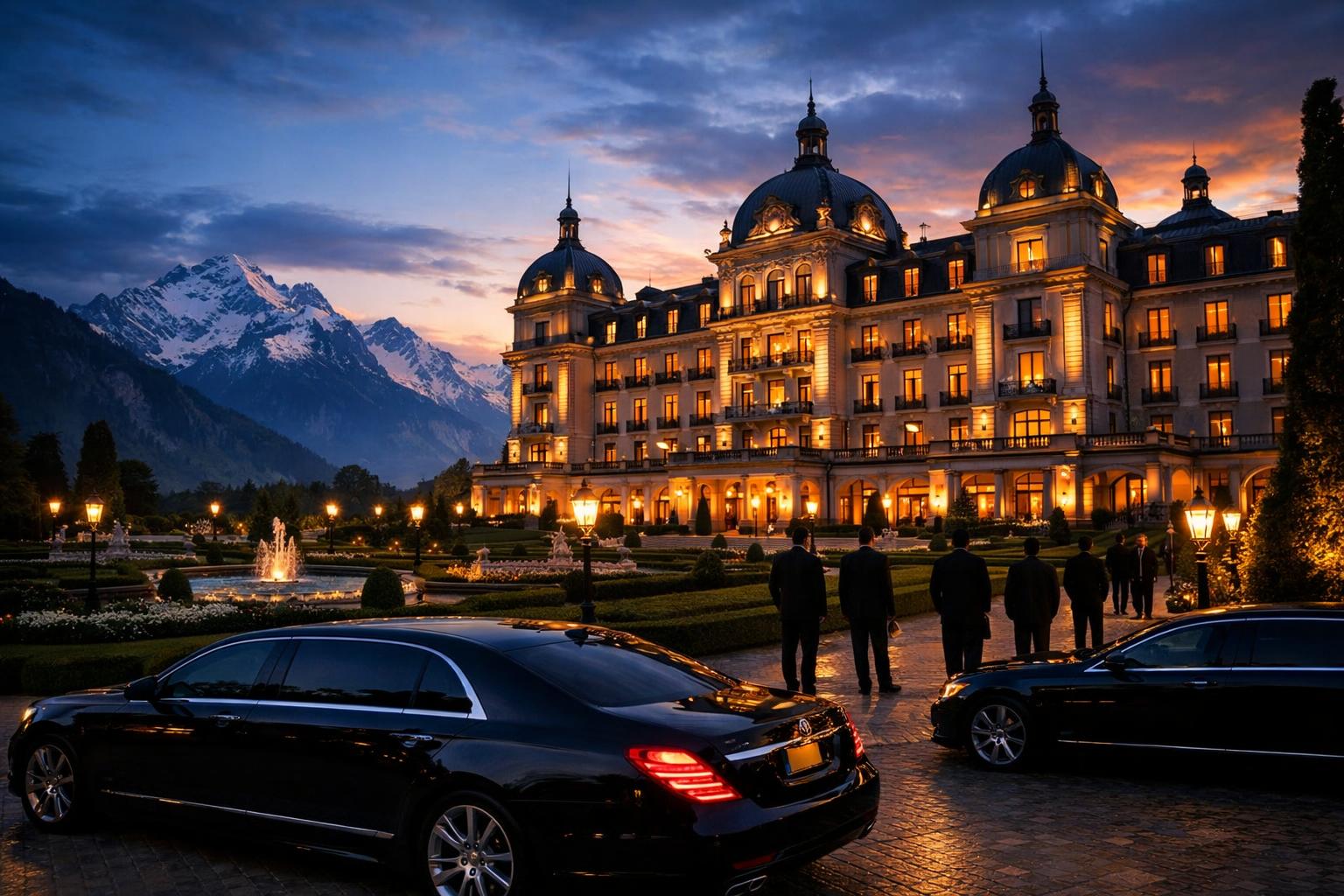
One of the less-discussed aspects of the Bilderberg Group is that it never meets in the same place twice in a row. Each year, the gathering rotates to a different luxury hotel or resort across Europe or North America. Security is extraordinary: entire hotels are vacated, roads are sealed, and local police are supplemented by layers of private security.
Chantilly, Virginia, USA — The Westfields Marriott, a sprawling conference resort in the Virginia countryside outside Washington D.C., has hosted multiple gatherings. Situated just miles from CIA headquarters in Langley, it sits at the center of the world's most powerful intelligence community.
St. Moritz, Switzerland — The legendary Swiss resort, synonymous with old money and Alpine discretion, has hosted Bilderberg gatherings. Switzerland's centuries-long tradition of banking secrecy and political neutrality makes it an almost inevitable fit.
Sintra, Portugal — This UNESCO World Heritage mountain town outside Lisbon, draped in royal palaces and aristocratic estates, has served as a Bilderberg venue. Sintra is already one of Europe's most hauntingly beautiful destinations — knowing that some of the 20th century's most consequential private meetings took place here adds an extraordinary layer to any visit.
Watford, England — The Grove Hotel, a stately English country house northwest of London, hosted the 2013 Bilderberg meeting — one of the most protested in the Group's history, drawing thousands of demonstrators and sustained mainstream media attention for the first time.
For the history-minded traveler, tracing the Bilderberg circuit is a journey through the physical geography of Western power — a map of old wealth, political discretion, and the places where the world's most influential people prefer not to be watched.
What Are They Actually Discussing?
Since 2010, the Bilderberg Group's official website has released a summary agenda after each annual meeting. The topics are broad, strategic, and remarkably aligned with the defining issues of our time.
Recent published agendas have covered: artificial intelligence and its governance, the future of NATO and Western military strategy, energy security and the move away from fossil fuels, economic inequality and social stability, the trajectory of the European Union, and the geopolitical challenge posed by China's rise.
These are not fringe topics. They are the defining questions of the 21st century. And the people with the most power to answer them are meeting privately, once a year, with no public record of what they concluded.
Supporters of the Group argue this is precisely the point. Candid, informal dialogue between consequential figures — freed from media performance — leads to better thinking and ultimately better outcomes than the theater of public political debate. Former attendees who have spoken on the record describe intellectually stimulating exchanges of perspectives, not a command center for global domination.
Critics remain skeptical. They consistently point to one pattern: topics that surface prominently at Bilderberg tend to become policy priorities in the months and years that follow. The architecture of the European Union, the post-Cold War expansion of NATO, the structural frameworks of the global economic order — all have documented Bilderberg discussion threads that preceded major real-world developments.
Cause and effect? Or simply the natural result of the fact that the people who attend Bilderberg are, by definition, the people already shaping the world? The honest answer is that we cannot know. The meetings are private. That is the whole point.
The Conspiracy Theories: Where Facts End and Speculation Begins
Any honest discussion of the Bilderberg Group has to reckon with the enormous ecosystem of speculation that surrounds it.
In online forums, YouTube communities, and political circles spanning the ideological spectrum, Bilderberg has become shorthand for a larger belief: that the world is secretly run by a small, unaccountable elite pursuing a hidden agenda. Some of that concern is a reasonable extrapolation from documented facts — the Group is real, it is secretive, its members are powerful, and its discussions are never disclosed.
Other claims go much further: that Bilderberg coordinates a "New World Order," that it orchestrates depopulation agendas, that it serves as the visible layer of even more shadowy organizations. These claims lack verified evidence. They are speculation — and often lavishly embellished speculation at that.
What the We Are History video gets exactly right is the key distinction: the secrecy itself is what deserves scrutiny. You don't need to believe in anything conspiratorial to find it troubling that the world's most powerful people routinely make consequential decisions without any democratic oversight. That concern is grounded in principles most people already hold — transparency, accountability, and the basic democratic idea that power should be exercised on behalf of the public, not hidden from it.
As the video puts it: "Power rarely operates in the open. And that's where the mystery lives."
What History Teaches Us About Secret Power
History offers no shortage of examples of consequential decisions made behind closed doors by a small circle of powerful people.
The Congress of Vienna in 1815, where the great powers of Europe redrew the continent's map without asking the people who lived on it. The Yalta Conference in 1945, where Roosevelt, Churchill, and Stalin divided the postwar world across a table in a Crimean palace. The smoke-filled back rooms of American political conventions, where party bosses chose presidential nominees long before voters had any say.
In each case, excluding the public from consequential decisions carried real costs — measured in the lives, freedoms, and futures of millions of people who had no voice in the rooms where their fates were discussed.
The Bilderberg Group belongs to this tradition. It is neither unprecedented nor unique. What sets it apart is its extraordinary longevity — more than seven decades of uninterrupted annual meetings — and the era it operates in. In a world of radical transparency and instant global communication, a gathering this influential and this private feels increasingly out of place. And increasingly worth watching.
Should We Be Concerned?
The We Are History video ends on exactly the right question: should we be concerned?
The answer is not simple. Concern does not require believing in a secret world government. It only requires believing that democracy depends on transparency — that power must answer to someone — and that decisions affecting billions of people should not be made in private by the people those decisions most directly benefit.
The Bilderberg Group is not going anywhere. It has survived over 70 years of protest, media scrutiny, and public suspicion without fundamentally changing its secretive character. What has changed is awareness — and the tools available to document, investigate, and discuss it publicly.
That is exactly what channels like We Are History exist to do. Not to manufacture fear or spread unverified claims, but to ask the questions mainstream media too rarely does: Who is in the room? What are they deciding? And why aren't we allowed to know?
Because as the video reminds us — the most important conversations about our future may still be happening in rooms we will never see.
Watch the Full We Are History Video
The We Are History deep dive covers the Bilderberg Group's origins, the Chatham House Rule, the controversies, and the bigger questions about power in the modern world. Watch it below — and subscribe for new history every week.
▶ Bilderberg Exposed: The Elite's Secret Meetings — We Are History
Frequently Asked Questions About the Bilderberg Group
What is the Bilderberg Group?
The Bilderberg Group is a private annual conference of approximately 120 to 150 influential figures drawn from politics, finance, industry, media, and academia — primarily from North America and Europe. Founded in 1954, it has met every year since, with all proceedings kept strictly confidential.
Where does the Bilderberg Group meet?
The location rotates each year among luxury hotels in North America and Europe. Past venues have included sites in the Netherlands, Switzerland, the United States, England, Portugal, and Austria, among others.
Who attends the Bilderberg Group?
Over the decades, confirmed or widely reported attendees have included heads of state, senior government ministers, CEOs of major global corporations, central bank officials, intelligence community figures, and prominent academics and journalists.
Is the Bilderberg Group a conspiracy?
The Bilderberg Group is a real, documented organization — acknowledged on its own official website. What remains unverified are claims of secret agendas or coordinated global control. The established fact is simply that very powerful people meet privately each year and do not disclose what they discuss.
Can anyone attend a Bilderberg meeting?
No. Attendance is strictly by invitation, extended through a private steering committee. The meetings are closed to the public and press entirely.
Is the Bilderberg Group connected to the New World Order?
"New World Order" is a term from conspiracy theory circles used to describe a hypothetical secret world government. Some theorists link Bilderberg to this concept, but no verified evidence supports that connection. The Group's stated purpose is to facilitate open dialogue between transatlantic leaders.
Where did the Bilderberg Group get its name?
It takes its name from the Hotel de Bilderberg in Oosterbeek, Netherlands — the site of the founding meeting in May 1954.
Explore the History Yourself
For the history traveler, the Bilderberg circuit traces a remarkable journey across the geography of modern power — from the quiet Dutch forest town of Oosterbeek, where it all began in 1954, to the Alpine resorts and English country estates that have hosted its most recent gatherings.
These are not just beautiful destinations. They are the physical addresses of decisions that shaped our world — made, as always, far from public view.
And understanding that history — who held power, where they held it, and what they chose to keep hidden — is exactly what We Are History is here for.
Enjoyed this piece? Subscribe to the We Are History YouTube channel for new history every week — the stories they never taught you in school.
What do you think is really discussed at Bilderberg? Drop your thoughts in the comments below.